
What are HRB?
The Story of Human-Residential Bifidobacteria (HRB)
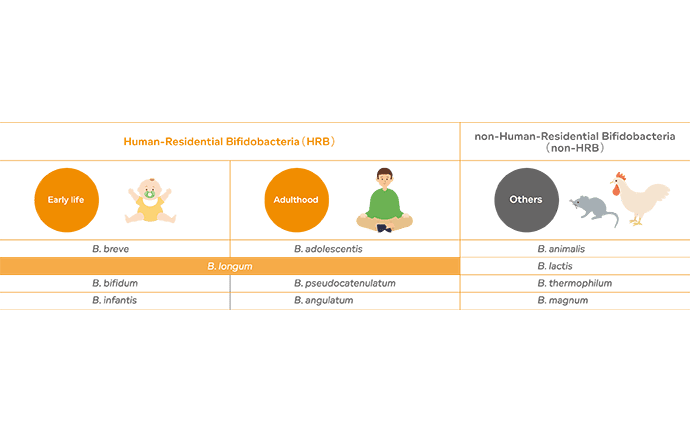
The genus Bifidobacterium is currently composed of approximately 100 species, including 11 subspecies. Among them, only a few of these are common inhabitants of human gut, and these species of human origin are grouped as Human-Residential Bifidobacteria (HRB).
Meanwhile, other species which are the natural inhabitants of animal or environment are referred to as non-HRB; such as B. animalis subsp. animalis, B. animalis susbp. lactis, B. pseudolongum, etc. It is noted that B. animalis subsp. lactis was not frequently detected in human guts and their ages were restricted. Although B. animalis subsp. lactis is thought to be not feasible for using a wide variety of carbon resources in the human gut environment, its wide use as probiotics in commercial dairy products might affect the detection after weaning.
It is widely recognized that the health-promoting traits of bifidobacteria are strain-specific. However, accumulating evidence suggests that bifidobacterial species of different residential origins display differences in their physiological features and functions in human health. Current research has demonstrated the differential physiological features of HRB and non-HRB such as metabolic capability, meanwhile comparative and functional genomic investigations have revealed the genetic attributes of bifidobacteria, which may explain their colonization affinities in the human gut.
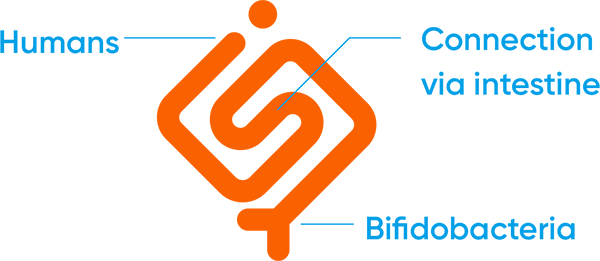
Connection
between Humans and HRB
This design expresses the connection between humans and HRB via the intestine,
and the fact that HRB will continue to contribute to peoples’ health and future.
The orange color represents how HRB can brighten and support people’s health and future.