
The Science Behind HRB
Key Features of HRB
Human Milk: The Best Source of Infant Nutrition
The Composition of Human Milk

Human milk is the gold standard in infant nutrition. It plays an enormous role in infant health development. Its secret is its ingenious and unique composition.
Human milk is comprised of vital nutrients and distinct bioactive molecules that the infant needs for growth and development, which include carbohydrates (mainly lactose), fats, proteins, human milk oligosaccharides (HMOs), vitamins and minerals, immunological factors, growth hormones, human milk microbiota, and antimicrobial components such as lysozymes.
Human Milk Contains Bifidogenic Factors
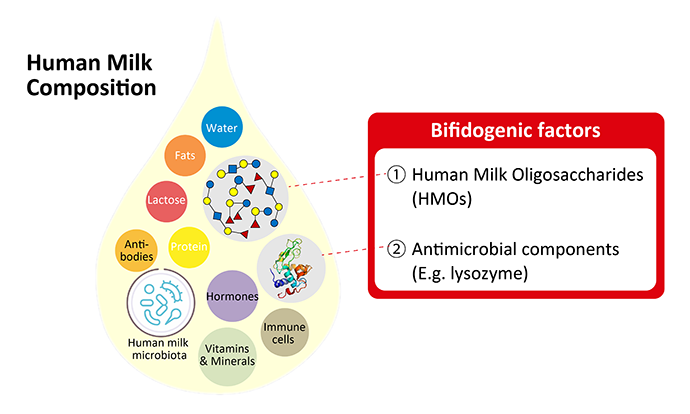
Human milk plays a role in the assembly of infant gut microbiota that is generally dominated by bifidobacteria. This bifidobacteria-enriched gut microbiota is thought to confer many health benefits to infants. It has been reported that the gut microbiota of formula-fed infants is different from that of breastfed infants with bifidobacteria being less abundant in formula-fed infants[1]. Human milk contains various bioactive factors that may act as selective factors for the enrichment of bifidobacteria in the infant gut. HMOs and lysozymes are thought to be two of the bifidogenic factors present in human milk.
Reference:
- 1Tannock G. W., Lawley B., Munro K., Pathmanathan S. G., Zhou S. J., Makrides M., et al. . (2013). Comparison of the compositions of the stool microbiotas of infants fed goat milk formula, cow milk-based formula, or breast milk. Appl. Environ. Microbiol. 79, 3040-3048.
HRB are Highly Compatible with Human Milk
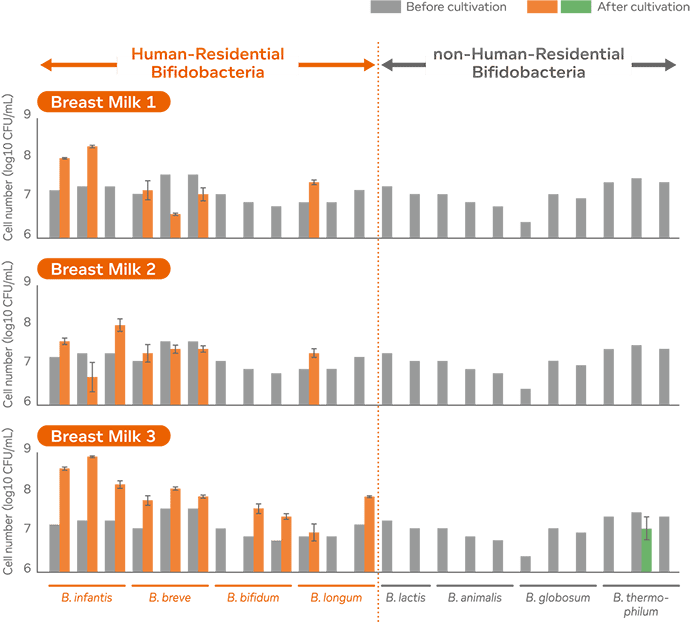
In an in vitro study, the ability of 37 bifidobacterial strains to grow in human milk was evaluated.
The results clearly revealed that all of the HRB strains isolated from infants; B. breve and B. longum subsp. infantis grew well in human milk, while adult-type HRB (B. longum subsp. longum) showed strain-specificity. Meanwhile, most of the non-HRB failed to grow and even died out after overnight incubation in the human milk[1].
Consistent with our observations, Tannock et al.(2013) compared the compositions of microbiota in the stool of breastfed or formula-fed infants, and revealed that HRB species such as B. longum and B. breve were more abundant in breastfed infants[2]. In addition, a crossover clinical study reported that the gut microbiota of premature infants had a higher prevalence of bifidobacteria when the infants were supplemented with B. longum subsp. infantis versus B. animalis subsp. lactis for two weeks[3].
Reference:
- 1Minami, J., Odamaki, T., Hashikura, N., Abe, F. and Xiao, J., 2016. Lysozyme in breast milk is a selection factor for bifidobacterial colonisation in the infant intestine. Beneficial Microbes 7: 53-60.
- 2Tannock G. W., Lawley B., Munro K., Pathmanathan S. G., Zhou S. J., Makrides M., et al. . (2013). Comparison of the compositions of the stool microbiotas of infants fed goat milk formula, cow milk-based formula, or breast milk. Appl. Environ. Microbiol. 79, 3040-3048.
- 3Underwood, M.A., Kalanetra, K.M., Bokulich, N.A., Lewis, Z.T., Mirmiran, M., Tancredi, D.J. and Mills, D.A., 2013. A comparison of two probiotic strains of bifidobacteria in premature infants. Journal of Pediatrics 163: 1585-1591.
Metabolism of HMOs
What are HMOs?
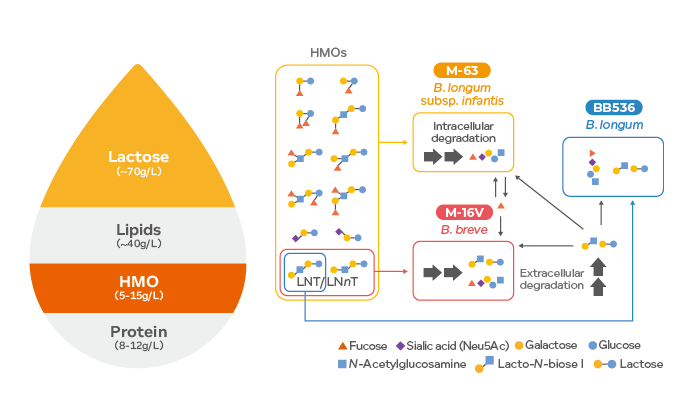
Human milk oligosaccharides (HMOs) are unconjugated complex carbohydrates that are highly abundant in and unique to human milk. They are known to represent the third most abundant component in human milk after lactose and fatty acids, and to exhibit bifidogenic effect that selectively stimulate the growth of infant-type HRB and contribute to gut colonization.
HMOs encompass more than 200 different molecular structures. Three infant-type HRBs exhibit a high capacity to metabolize HMOs. For example, B. bifidum breaks down HMOs extracellularly into mono - and disaccharides, which it can absorb itself and share with other bifidobacteria through cross-feeding. In contrast, B. longum subsp. infantis imports HMOs almost entirely intact and degrades them intracellularly[1].
Infant-Type HRB are Specialized in Utilizing HMOs
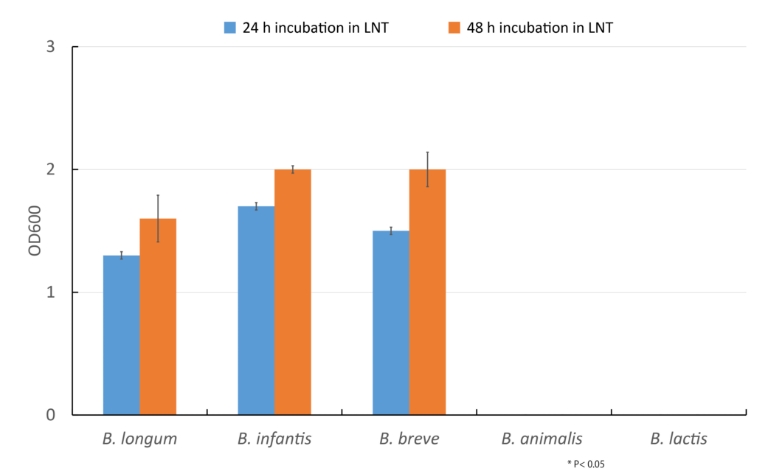
Some research showed that B. longum subsp. infantis can utilize HMOs as a sole carbon source and grow vigorously[2,3]. Comparisons of genomes between HRB and non-HRB also exemplified the functional capabilities of HRB to assimilate LNT[3], particularly infant-type HRB, such as B. longum subsp. infantis, which is considered as the archetypical HMOs-utilizing bacterium[4].
These studies reflect that infant-type HRB has undergone specific genetic adaptation and strict co-evolution with the infant host. The studies also illustrate the specialization of infant-type HRB in utilizing HMOs.
Reference:
- 1Ojima MN, et al. Priority effects shape the structure of infant-type Bifidobacterium communities on human milk oligosaccharides. ISME J. 2022;16(9):2265-2279.
- 2Asakuma, S., Hatakeyama, E., Urashima, T., Yoshida, E., Katayama, T., Yamamoto, K., Kumagai, H., Ashida, H., Hirose, J. and Kitaoka, M., 2011. Physiology of consumption of human milk oligosaccharides by infant gut-associated bifidobacteria. Journal of Biological Chemistry 286: 34583-34592.
- 3Odamaki, T., Horigome, A., Sugahara, H., Hashikura, N., Minami, J., Xiao, J.-Z. and Abe, F., 2015. Comparative genomics revealed genetic diversity and species/strain-level differences in carbohydrate metabolism of three probiotic bifidobacterial species. International Journal of Genomics 2015: 5678092015.
- 4Sela, D., Chapman, J., Adeuya, A., Kim, J., Chen, F., Whitehead, T., Lapidus, A., Rokhsar, D., Lebrilla, C.B. and German, J.B., 2008. The genome sequence of Bifidobacterium longum subsp. infantis reveals adaptations for milk utilization within the infant microbiome. Proceedings of the National Academy of Sciences of the USA 105: 18964-18969.
Tolerance to Lysozyme
Lysozyme in Human Milk as a Selective Factor
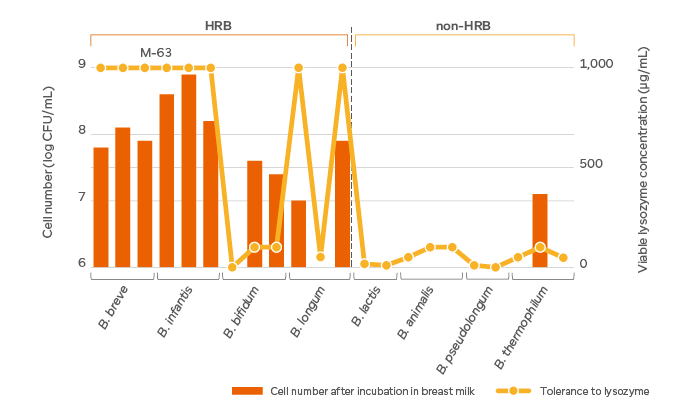
Not only HMOs, lysozyme could be another important key factor for the selective colonization of Bifidobacterium species in the infant gut.
It is reported that the amount of lysozyme contained in human milk is generally about 1000 to 3000-fold higher than that contained in bovine milk, so lysozyme is one of the essential factors as a natural "antibiotic" especially for infant health.
Recent studies revealed that the presence of lysozyme contributes to the selective compatibility of bifidobacteria with human milk[1,2], and might also be affecting the species dominating in an infant’s gut.
HRB are Highly Tolerant to Lysozyme
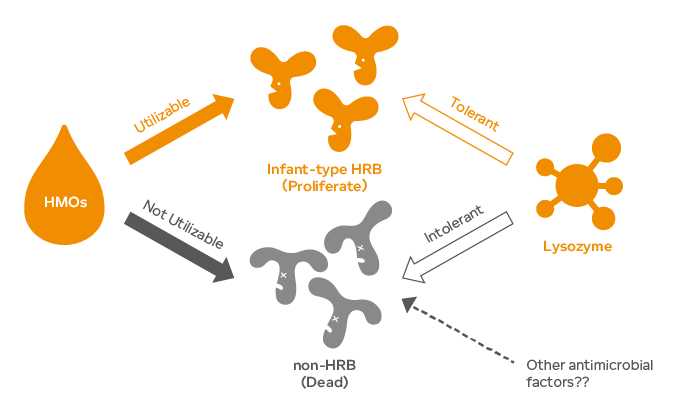
An in vitro study[1] conducted by Morinaga Milk revealed that most infant-type HRB strains were moderately tolerant; on the other hand non-HRB strains were sensitive to both human milk and egg white lysozymes.
Moreover, lysozymes are naturally present in almost all tissues, body fluids, and secretions such as tears, nasal discharge or saliva, and especially in human milk. In this sense, susceptibility to lysozyme might stand as a threat for the survivability of bifidobacteria in the human gut, suggesting HRB with lysozyme tolerance are more suitable for colonization in human gut.
Reference:
- 1Minami, J., Odamaki, T., Hashikura, N., Abe, F. and Xiao, J., 2016. Lysozyme in breast milk is a selection factor for bifidobacterial colonisation in the infant intestine. Beneficial Microbes 7: 53-60.
- 2Rockova, S., Rada, V., Nevoral, J., Marsik, P., Vlkova, E. and Bunesova, V., 2012. Inter-species differences in the growth of bifidobacteria cultured on human milk oligosaccharides. Folia Microbiologica 57: 321-324.
ILA Production and conversion
ILA: New substance which HRB produce
What is ILA?ILA is a Indole-3-lactic acid, a type of aromatic lactic acid and a intestinal metabolite that has been reported to have antibacterial, immunomodulation, and anti-inflammatory effects for infants. Based on our recent study, HRB (especially infant type) can produce high level of ILA, suggesting that HRB plays a key role for infant development [1].
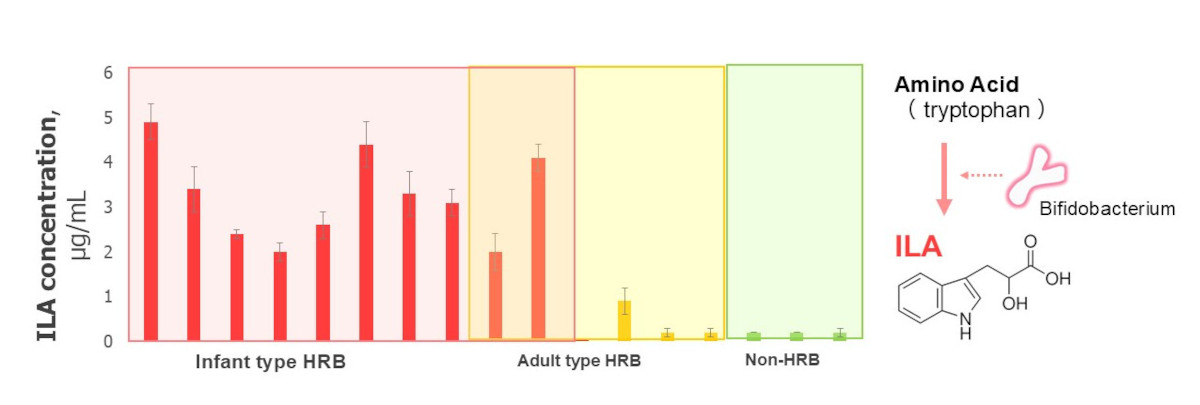
HRB converts indole to ILA, which is beneficial to the body
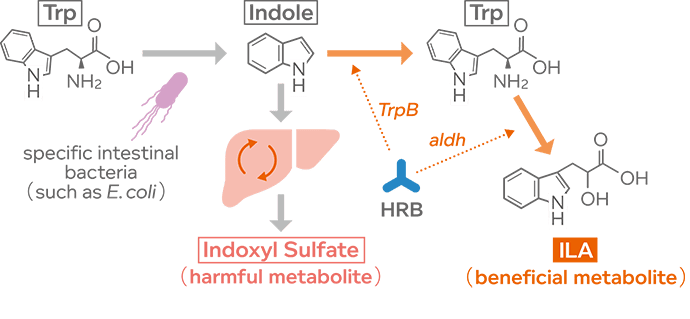
Indole produced by intestinal bacteria is metabolized in the liver and converted into indoxyl sulfate, a typical uremic toxin. Indole and indoxyl sulfate are known to be substances that are involved in promoting the progression of renal failure. Our research shows that HRB converts indole produced by Escherichia coli into tryptophan (Trp) and then into indole-3-lactic acid (ILA). HRB contains a gene that converts indole, a precursor of uremic toxin, to beneficial ILA [2].
Reference:
- 1Sakurai, T.; Odamaki, T.; Xiao, J.-z. Production of Indole-3-Lactic Acid by Bifidobacterium Strains Isolated fromHuman Infants. Microorganisms 2019, 7, 340.
- 2Yong, Cheng Chung et al. “Human gut-associated Bifidobacterium species salvage exogenous indole, a uremic toxin precursor, to synthesize indole-3-lactic acid via tryptophan.” Gut microbes vol. 16,1 (2024)
Folate Production
HRB are Highly Capable of Producing Folate in vitro
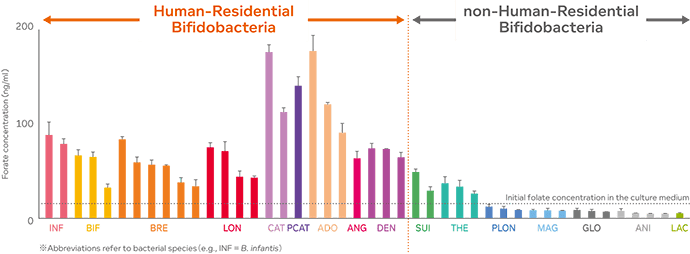
HRB and non-HRB possess differences in their capabilities to produce folate. In an in vitro study[1], the ability of 44 bifidobacterial strains to produce folate was evaluated. The results clearly revealed that HRB strains were able to produce high levels of folate in vitro, while most strains of non-HRB strains were not.
HRB-Colonized Rats had Higher Levels of Folate
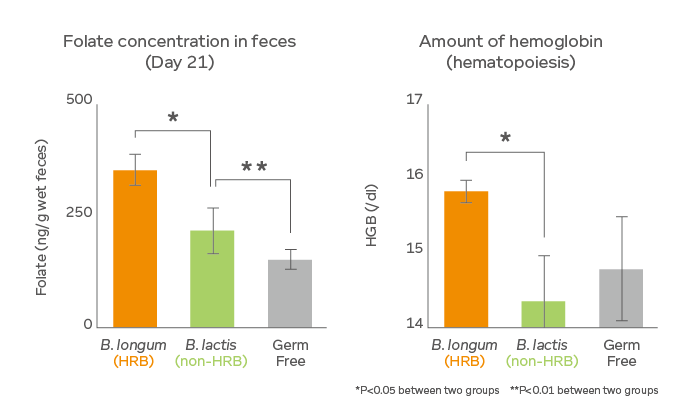
The ability of HRB strain to directly synthesize folate in the gut was confirmed in an animal study[1]. Germ free mice were administered with either a single strain of HRB (B. longum subsp. longum) or non-HRB (B. animalis subsp. lactis) on day 0. Fecal and serum analyses were performed on days 7, 14, 21, and 28.
The fecal folate concentrations and the amounts of hemoglobin were significantly higher in the mice colonized with HRB (B. longum), compared with mice colonized with non-HRB (B. lactis).
These studies demonstrated the superiority of HRB in folate production, suggesting folate-producing HRB strains could be more beneficial in anaemia prevention and conferring health benefits to the host.
Reference:
- 1Sugahara, H., Odamaki, T., Hashikura, N. and Xiao, J.-Z., 2015. Differences in folate production by bifidobacteria of different origins. Bioscience of Microbiota, Food and Health 34: 87-93.
 What is Folate?
Folate, also known as vitamin B9, plays an important role in host metabolism. Folate deficiency increases the risk for malformation of neural tube and megaloblastic anaemia, cancer, Alzheimer's disease and cardiovascular disease.
Microbial Relay
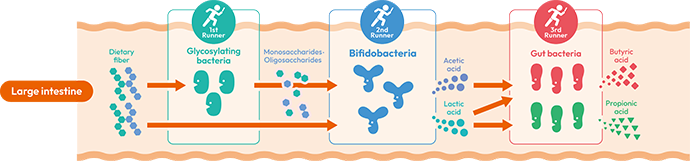
The “microbial relay” describes how gut microbes share work
and pass fiber-derived metabolites like a baton. The second runner plays a crucial role by passing the “baton” (metabolites) to the third runner (Propionate-producing bacteria). Therefore, in addition to consuming dietary fiber as a microbial substrate, it is important to take care of the second step.
HRB function in the second step, and some human-selected HRB (e.g., B. longum subsp. longum) also have the capability of taking up dietary fiber-derived components[1].
This framework helps consumers understand otherwise invisible microbial functions and strengthens the rationale for concepts such as “combining dietary fiber with HRB” or “coadministering HRB with butyrate-producing bacteria” in product development.
Reference:
- 1Wong CB, Odamaki T, Xiao JZ. Insights into the reason of Human-Residential Bifidobacteria (HRB) being the natural inhabitants of the human gut and their potential health-promoting benefits. FEMS Microbiol Rev. 2020;44(3):369-385.